Department of Conservation and Recreation
Conserve. Protect. Enjoy.
Department of Conservation and Recreation



When Joe Maroon was in third grade, his mother asked him to look out the train window.
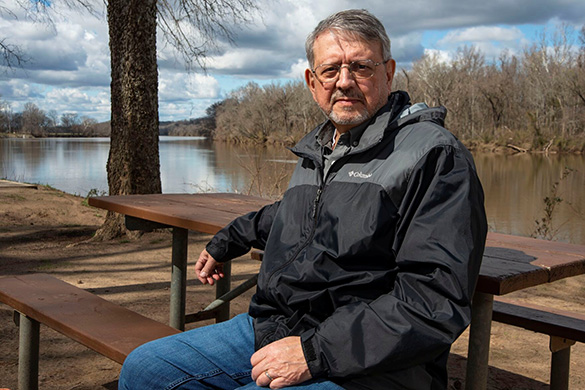
As they crossed the industrial Midwest on a three-day journey from Ohio to California to visit his older brother, smokestacks lined the horizon. “She said, ‘Look at all that pollution. I wonder where all that is going?’” Maroon recalled.
That simple observation stayed with him.
A few years later, in 1969, another image emerged. The Cuyahoga River near his hometown of Akron caught fire after years of industrial pollution.
“Even as a teenager, that got my attention,” he said.
Those two moments helped spark what would become a lifetime dedicated to protecting Virginia’s natural resources — through both environmental advocacy and as two-term DCR director.
As DCR celebrates its 100th anniversary, Maroon’s story reflects not only the evolution of one agency but also the growing environmental consciousness that transformed Virginia during the late 20th century.
After moving to Virginia as a teenager, Maroon joined his high school ecology club before attending Virginia Tech, where a student job at the university’s Water Resources Research Center introduced him to water policy.
His career path took him to the Joint Legislative Audit and Review Commission, where he led a study on Virginia’s seafood industry. That work brought him face-to-face with the Chesapeake Bay.
“I fell in love with it,” Maroon said. “I don’t believe in love at first sight, but that was love at first sight.”
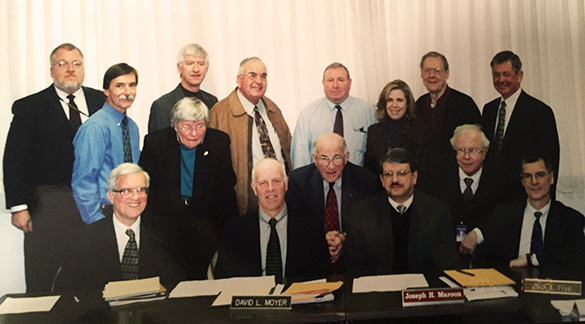
The experience led him to become the first Virginia executive director of the Chesapeake Bay Foundation. He spent 16 years helping shape many of the Commonwealth’s foundational environmental laws and policies before accepting Gov. Mark Warner’s appointment to lead DCR.
“I gave up a great job at the Bay Foundation,” Maroon said. “But I got a great job at DCR. Frankly, I didn’t want any other position.”
When Maroon arrived at DCR in March 2002, he inherited an agency with diverse responsibilities: state parks, natural heritage, soil and water conservation, dam safety, land conservation and more.
Rather than viewing those programs as separate silos, he saw a single mission — a philosophy that shaped his leadership.
“I viewed it as one whole agency,” Maroon said. “I cared about all parts of the organization.”
He worked to help employees better understand one another’s work, creating agencywide forums where staff from different divisions could share ideas and celebrate their accomplishments. He even surprised employees at one gathering by bringing his guitar and performing a song about DCR.
“It was just the fun aspect,” he said. “I wanted people to understand there was a bigger purpose in what we were doing.”
Maroon also reminded employees that every interaction with the public reflected on the agency.
“People that come in contact with you are going to make a decision about what they think of DCR,” he told staff. “It’s not going to be me. It’s going to be you.”
Maroon’s eight years leading DCR coincided with one of the most significant periods of growth in the agency’s history.
Early in his tenure, Virginia voters approved a $119 million bond package that funded improvements to existing state parks while creating six new parks and expanding the Virginia Natural Area Preserves system.
Under his leadership, the agency also helped launch Virginia’s modern stormwater management program, strengthened agricultural best management practices, elevated land conservation efforts and played a central role in Gov. Tim Kaine’s initiative to permanently conserve 400,000 acres across the Commonwealth.
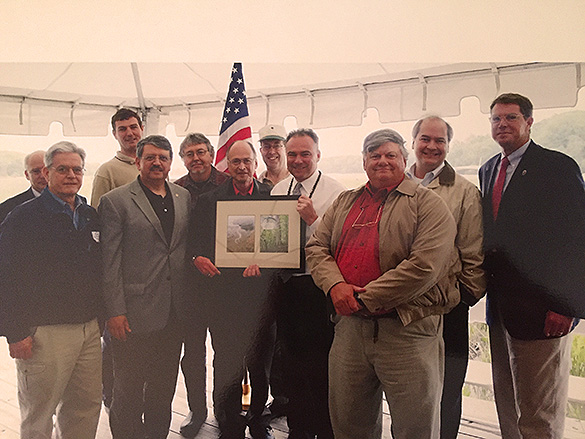
Among the accomplishments Maroon treasures most is protecting Crow’s Nest Natural Area Preserve in Stafford County, then considered one of the East Coast’s most significant remaining unprotected natural landscapes.
“It took a real effort,” he said. “But eventually, working with Stafford County, conservation organizations and so many partners, we were able to protect it.”
He also points to the creation of DCR’s Office of Land Conservation, expansion of trails including High Bridge Trail State Park and partnerships that permanently protected important public lands.
Maroon’s career unfolded alongside dramatic changes in public attitudes toward conservation.
He remembers when rivers catching fire, the Kepone contamination that closed the James River to commercial fishing for more than a decade and growing concerns over Chesapeake Bay water quality helped awaken the public to environmental issues.
“I think people began to understand environmental concerns when they saw the connections to their health and to their communities,” he said.
That awareness created momentum for bipartisan action.
“We would have major environmental legislation, and it was routine to have a Democrat in one chamber and a Republican in the other carrying it,” he said. “People worked together for stewardship of the Commonwealth.”
He worries that spirit has become more difficult to find today, even as new challenges emerge, from climate change and flooding to PFAS (more commonly referred to as “forever chemicals”), development pressures and the growing need for long-term conservation funding.
Looking back, Maroon believes DCR’s greatest accomplishments are measured not in legislation or budgets but in the places people continue to enjoy decades later.
He hopes future Virginians experience landscapes they otherwise might have lost — hiking across High Bridge, exploring Crow’s Nest, paddling cleaner rivers or visiting one of the parks expanded during his tenure.
“I hope they’ll be able to experience Virginia in ways they would not have been able to 20 years ago,” said Maroon, whose career moved to the philanthropic sector in 2013 when he became executive director of the Virginia Environmental Endowment.
For Maroon, DCR’s mission has always been the agency’s greatest strength.
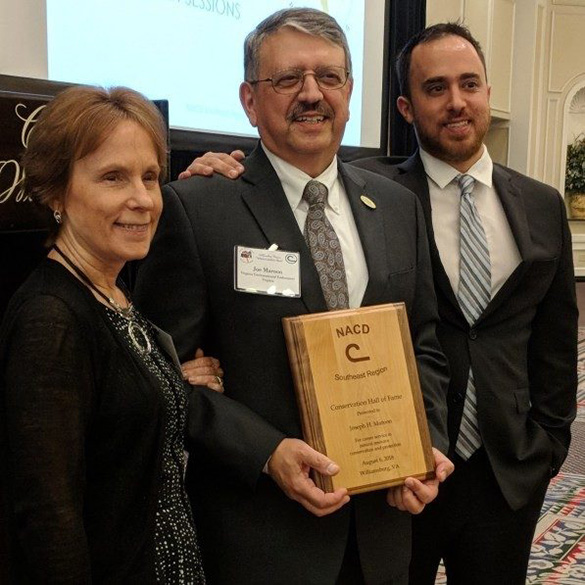
“It has such a broad mission that touches virtually every community and nearly every Virginian in some way,” he said. “The people who work there have made the Commonwealth a better place. They’ve left a legacy for the next generation.”
Categories
Conservation | Land Conservation | Natural Heritage
Tags
dcr100