Department of Conservation and Recreation
Conserve. Protect. Enjoy.
Department of Conservation and Recreation



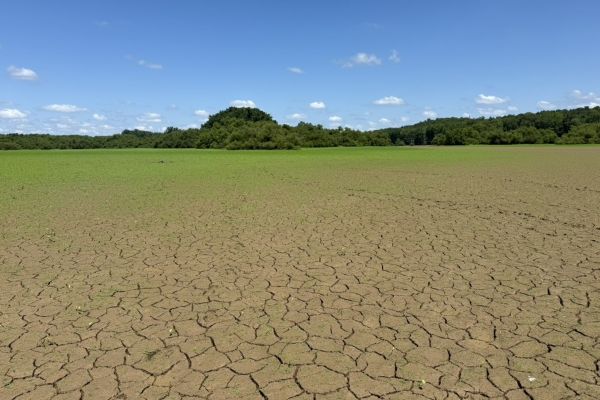
Virginia is going through its driest period since 1941. A severe drought continues in many parts of the state, including the Roanoke River region.
But some rare native plant species emerge only when the water levels go down enough to expose their river shore and mud flat habitats.
While many of the plants tracked by Natural Heritage are perennial and often long-lived plants, “drawdown” plants are different, said Joey Thompson, staff vegetation ecologist with the Virginia Natural Heritage Program. “They are annual species whose seeds are programmed to germinate relatively quickly upon a water drawdown event, rapidly go through their life cycle to produce more seeds, which are then adapted to be buried in the mud for the foreseeable future.”
Drawdown species do not occur very often, said Jennifer Stanley, field botanist. “We often see them in sinkhole ponds, but they also actually happen in a lot of different habitats: lakes, reservoirs and on river shores. This year, they’ve all been very dry. The seeds of these species can stay viable underwater for years – or even decades – and then when the water draws down and the sun reaches them, they can start growing.”
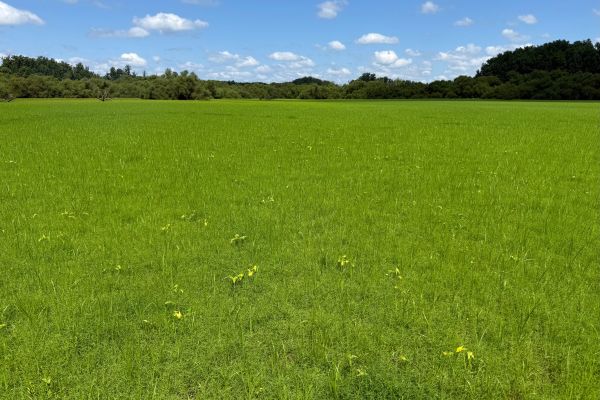
Stanley, Thompson and other botanists have found several such state-rare species this year at Falkland State Conservation Area (adjacent to Southside Savanna Natural Area Preserve) in Halifax County that were last seen in 1997. Some were also identified at Occoneechee State Park in Clarksville for the first time.
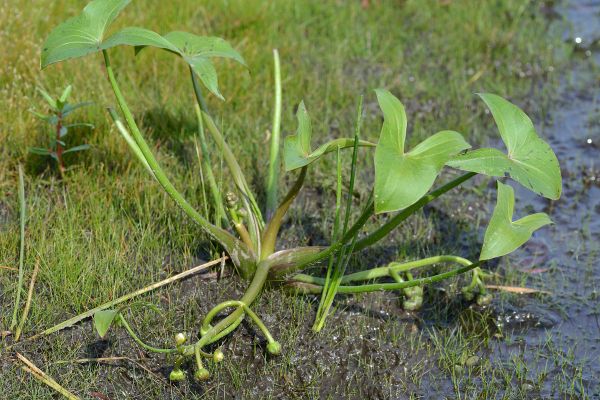
Hooded arrowhead (Sagittaria calycina), which is ranked critically imperiled in the state, had been known in Halifax, but the water hadn’t drawn down so low since the late 1990s. Stanley found it covering acres of the site.
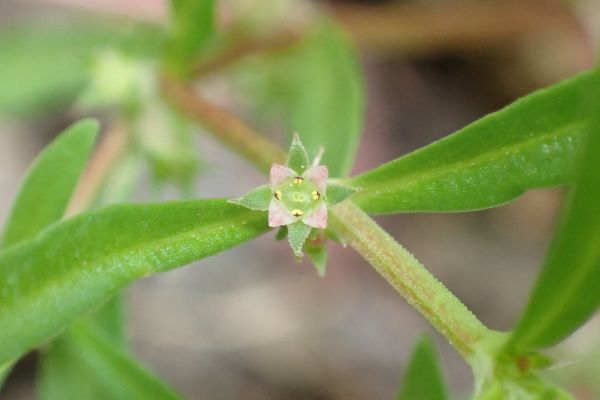
Another species recently seen there was Bosc’s Bluets (Oldenlandia boscii), which grows flat in a dense mat rather than upward, Stanley said. It is considered imperiled in Virginia.
“I don’t know if some of these drawdown species are actually as rare as we consider them to be,” Stanley said, “or if it’s that drawdowns themselves are rare.”
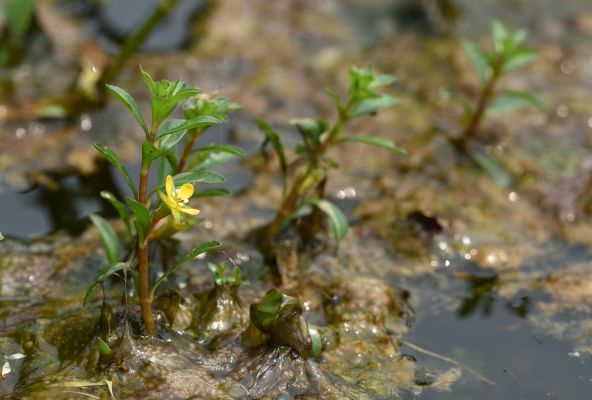
Zach Bradford, steward and supervisor of the Chesapeake Bay region for Natural Heritage, said another rare species he found earlier this year in James City County is Long Beach seedbox (Ludwigia brevipes). “It has non-flowering rooted aquatic plants that transform into creeping, flowering plants when water levels drop,” he said.
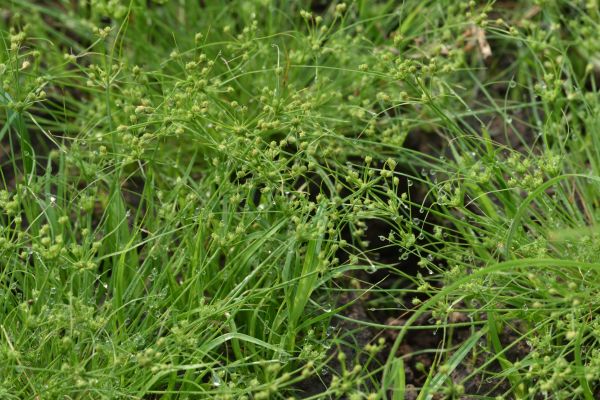
Also, at Grafton Ponds Natural Area Preserve in Newport News, Bradford has been tracking Virginia’s only population of a tiny sedge, Harper’s Fimbry (Fimbristylis perpusilla), over the past decade.
“For years, I would either find no plants or five to 10 plants,” he said. “For the first time that I’ve witnessed, this year, one of the larger ponds fully drew down, and there are thousands of plants.”
Categories
Conservation | Land Conservation | Native Plants | Natural Heritage | State Parks