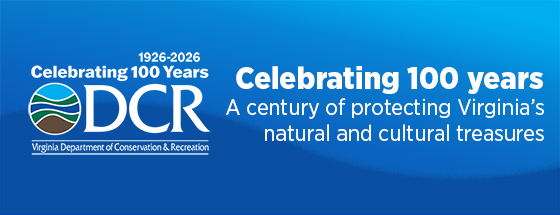
Joe Maroon
Posted September 14, 2026
Virginia marked a transformative period in conservation under Joe Maroon, who served as director of the Virginia Department of Conservation and Recreation from 2002 to 2010.
Early in his tenure, Virginia voters approved a $119 million parks and natural‑areas bond that funded improvements across all state parks, created six new parks and expanded the Virginia Natural Area Preserves system.
Under Maroon’s leadership, DCR also launched Virginia’s modern stormwater management program, strengthened agricultural best‑management practices and land‑conservation efforts and played a central role in Gov. Tim Kaine’s initiative to permanently conserve 400,000 acres across the commonwealth.
To learn more about Joe Maroon's success with DCR, read our blog at: https://www.dcr.virginia.gov/insights/a-river-on-fire-a-train-ride-west-and-a-lifetime-of-conservation
Back to the top
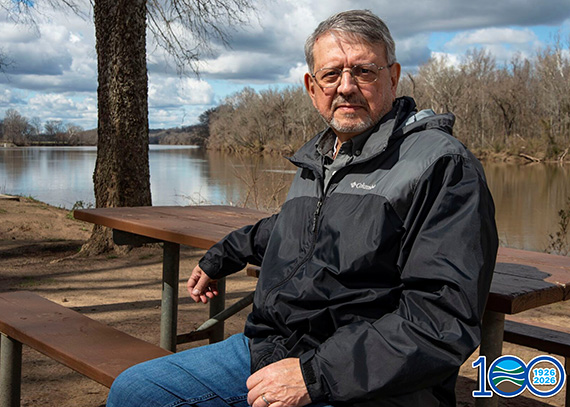
Virginia Land Conservation Foundation
Posted September 8, 2026
First funded in 1999, the Virginia Land Conservation Foundation (VLCF) was established by the General Assembly as one of the Commonwealth’s key tools for achieving long-term conservation goals. Working in partnership with DCR and other state agencies, VLCF has helped safeguard the places that make Virginia special.
Since its start, the VLCF has awarded grants to protect more than 269,000 acres — including working farms, historic sites, natural areas, public parks and vital watersheds. Every farmer who protects their land for food and fiber production and every community that creates a new park, is also helping preserve clean water, wildlife habitats, air quality and Virginia’s iconic landscapes.
Conservation is a shared effort — and together, we’re making an impact across the Commonwealth. To learn more about the Virginia Land Conservation Foundation, visit: https://www.dcr.virginia.gov/land-conservation/vlcf
Back to the top
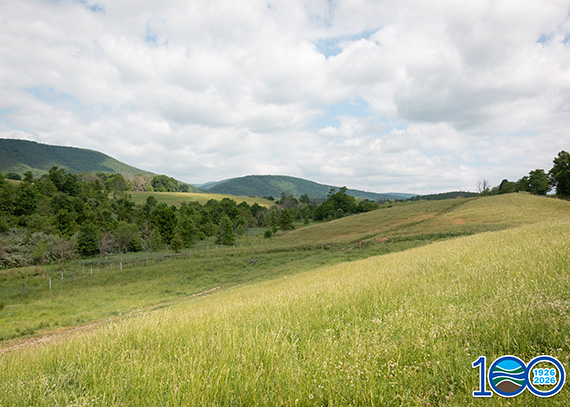
DCR Natural Heritage Program named best in the hemisphere.
Posted August 27, 2026
The Virginia Natural Heritage Program is part of an international network spanning all 50 states and every Canadian province, contributing vital data to NatureServe. Virginia’s program has earned the title of Outstanding Natural Heritage Program in the Western Hemisphere three times for its innovative work using science to drive conservation statewide.
Pictured is an article detailing the Natural Heritage Program’s first honor of receiving the award in 1994, just eight years after the program was created.
At the time, Tom Smith, director of DCR’s natural heritage program, said, “Credit for the award really goes to the hard-working, professional staff of the program. They’re the best.”
Read the pictured 1994 Grassroots article here:
https://www.dcr.virginia.gov/dcr100/document/grassroots-nhrecognition.pdf
Back to the top
Public support high for protecting Virginia’s habitats.
Posted August 17, 2026
The Department of Conservation and Recreation’s Natural Heritage Program manages Virginia’s Natural Area Preserve system, which was created in 1989 when the General Assembly passed the Natural Area Preserves Act.
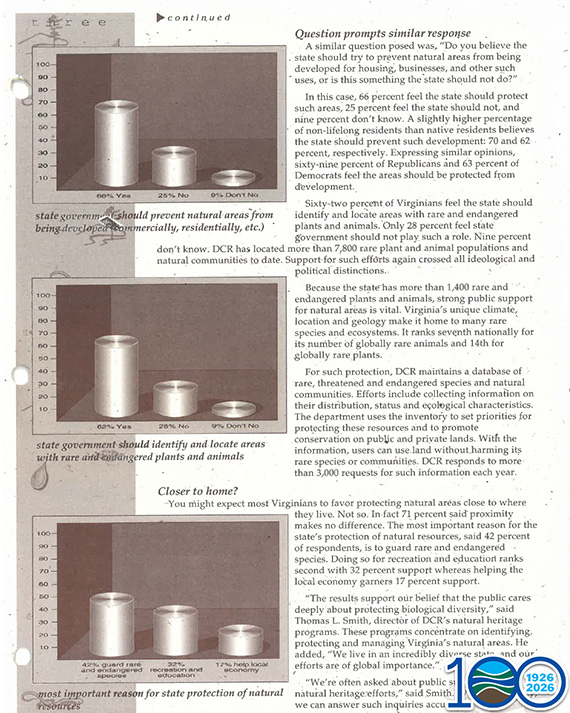
A 1994 survey conducted by Virginia Commonwealth University found that 78 percent of Virginians believed the state should protect previously untouched habitats and 66 percent said they preferred that these areas be protected from commercial and residential development.
That public support did not go unnoticed. At the time of the survey, the system included eight preserves totaling about 5,000 acres. Today, it has grown to 69 preserves protecting 66,700 acres in perpetuity. More than 20 natural area preserves offer free public access for visitors.
Read the pictured 1994 Grassroots article here:
https://www.dcr.virginia.gov/dcr100/document/grassrootspublicsupport-1.pdf
https://www.dcr.virginia.gov/dcr100/document/grassrootspublicsupport-2.pdf
Back to the top
Chesapeake Bay Study from 1976
Posted August 10, 2026
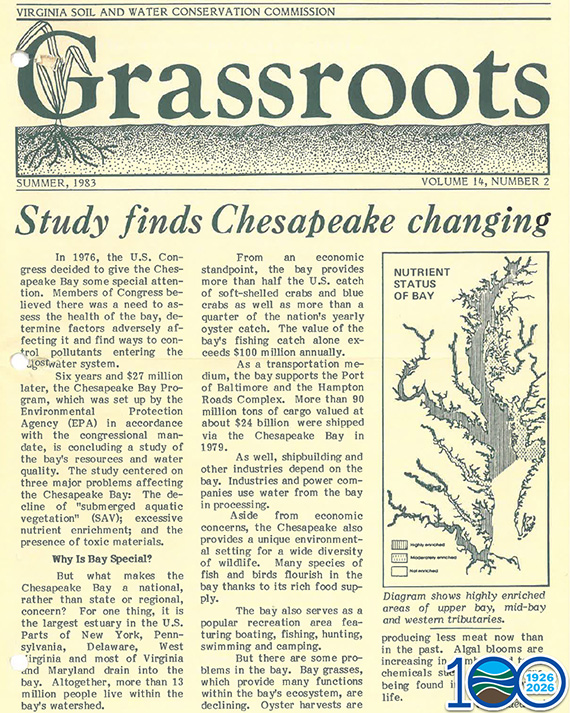
In 1976, a six-year landmark study on pollution in the Chesapeake Bay began. When the study concluded, the first Chesapeake Bay Agreement was signed in 1983 by the U.S. Environmental Protection Agency (EPA), Virginia, Maryland, Pennsylvania, the District of Columbia and the Chesapeake Bay Commission, recognizing the need for action to restore the bay.
Pictured is a 1983 article detailing the study’s findings, including the impacts of excess nutrients from non-point sources, the loss of light that led to declining submerged aquatic vegetation and increasing levels of toxicants — all contributing to a significant decline in the bay’s water quality.
The 1983 agreement laid the foundation for a series of Chesapeake Bay Agreements that followed in 1987, 2000, 2014 and 2025 each renewing regional commitments and expanding the goals for restoring the health and resilience of the Chesapeake Bay watershed.
Read the pictured 1983 Grassroots article here:
https://www.dcr.virginia.gov/dcr100/document/grassroots-chesapeake-1.pdf
https://www.dcr.virginia.gov/dcr100/document/grassroots-chesapeake-2.pdf
Back to the top
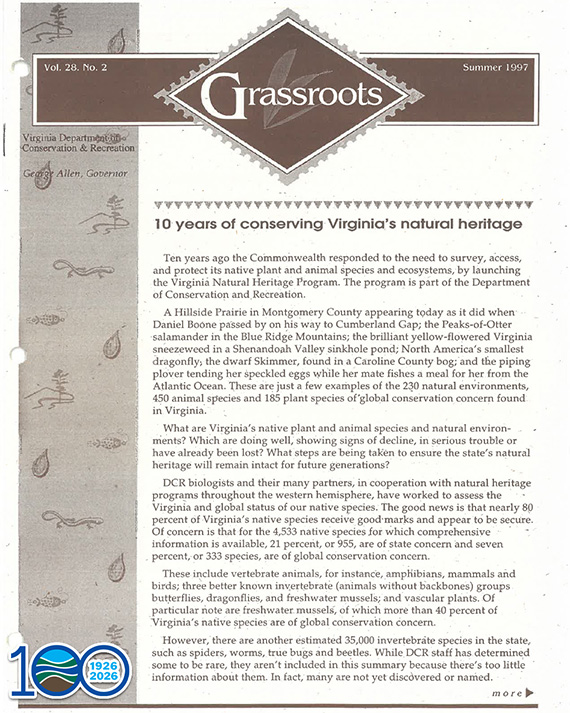
10 years of conserving Virginia's natural heritage - Number 1 in discovery and rediscovery
Posted August 7, 2026
Today we celebrate the Natural Heritage Program’s 40th anniversary!
On this day, August 27, 1986, the nation’s 43rd Natural Heritage Program was established, dedicated to protecting habitats for Virginia’s rare plants, animals, and natural communities.
Ten years later, DCR’s Natural Heritage Program ranked first in the country with seven new animal species discovered and 11 rediscoveries of species thought to be locally extinct.
Today, the Natural Heritage Program keeps inventory of rare species with staff scientists discovering 64 new species and 441 species not previously discovered in Virginia since the program’s creation in 1986.
For 2026 and beyond, we hope for continued support and appreciation for the significance that natural area preserves represent and strengthening efforts to protect Virginia’s diverse ecosystem. This includes safeguarding habitats and ensuring that future generations experience the full richness of the Commonwealth’s natural heritage.
Read the full 1997 Grassroots article here:
https://www.dcr.virginia.gov/dcr100/document/grassrootsnh10-1.pdf
https://www.dcr.virginia.gov/dcr100/document/grassrootsnh10-2.pdf
Back to the top
From a rented van to a statewide legacy
Posted August 1, 2026
The Virginia Natural Heritage Program is marking 40 years — a milestone that began with a rented van, a small team of scientists and a bold vision for protecting Virginia’s most significant natural resources.
Founding Director Michael Lipford set out to do three things: document, understand and protect. That mission has shaped how the Commonwealth balances growth and conservation for four decades. What started with five employees now includes more than 70 staff members and is recognized as one of the strongest programs of its kind.
“For all the reasons it was important then, it’s as or more important now,” Lipford said. To read more about Michael Lipford's achievements, visit: https://www.dcr.virginia.gov/insights/from-a-rented-van-to-a-statewide-legacy
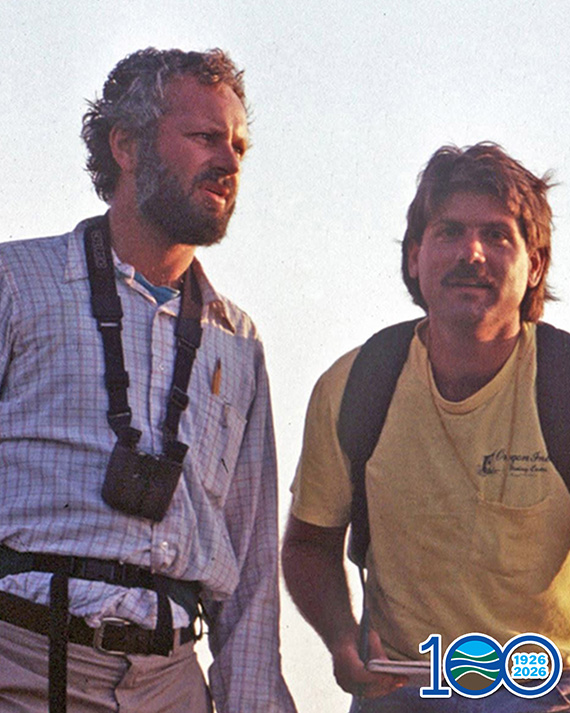
Pictured is Zoologist Chris Pague (left) and Natural Heritage Program founding Director Michael Lipford.
Back to the top
Virginia Land and Water Conservation Fund
Posted July 29, 2026
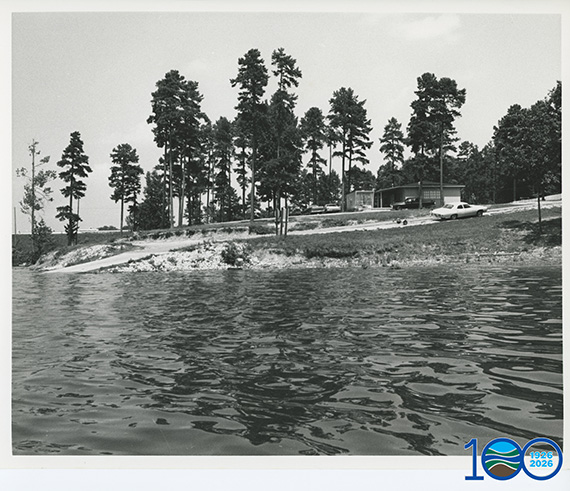
Since 1965, the Federal Land and Water Conservation Fund has helped communities across Virginia protect the outdoors we love and expand access to recreation.
Through this program, Virginia has invested more than $135 million in 400+ projects — from new parks and playgrounds to restored natural areas and upgraded outdoor spaces that connect people with nature.
But that’s just part of the story. DCR also manages several additional grant programs that help build and rehabilitate trails, improve outdoor access for people with disabilities and preserve significant Revolutionary War, War of 1812 and Civil War battlefield lands.
These efforts ensure that Virginia’s landscapes, history and recreation opportunities will be enjoyed for generations to come.
Learn more about the Land and Water Conservation Fund here: https://www.dcr.virginia.gov/recreational-planning/lwcf
Back to the top
Clean Water Farm Awards
Posted July 13, 2026
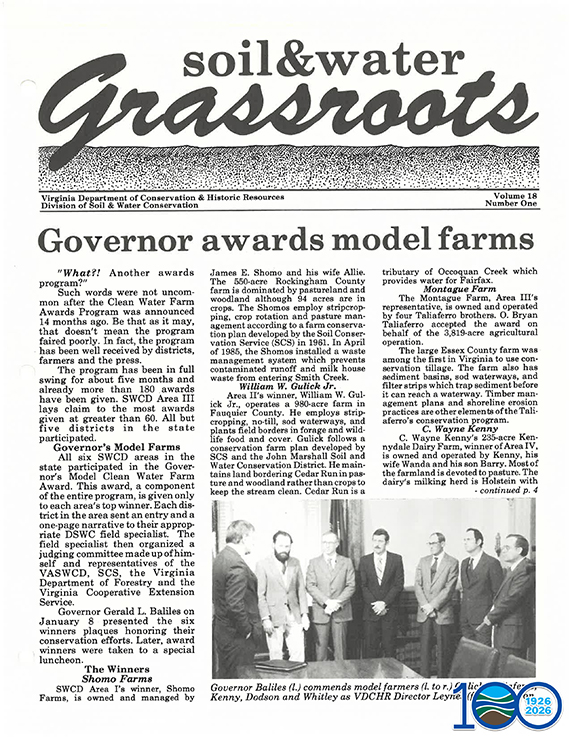
In 1986, the Clean Water Farm Awards were established to recognize farmers whose exemplary efforts helped preserve water quality across the Commonwealth. Within the program’s first five months, more than 180 awards had been presented, including six Model Farm Awards given by Governor Gerald L. Baliles to the leading farms in each region.
At the time, Division of Soil and Water Conservation Director Roland B. Geddes said, “These farms are the cream of the crop. They are the best. All Virginians owe their owners a special thanks for helping improve the quality of our state’s waters. And they do all this voluntarily.”
Today, the legacy of these awards lives on. Up to 10 model farms receive Grand Basin recognition each year for demonstrating exceptional commitment to practices that protect soil and water.
View the 2025 Clean Water Farm Award Grand Basin Winners here: https://www.dcr.virginia.gov/soil-and-water/cwfa-winners
Back to the top
Virginia Agricultural Cost-Share Program
Posted July 1, 2026
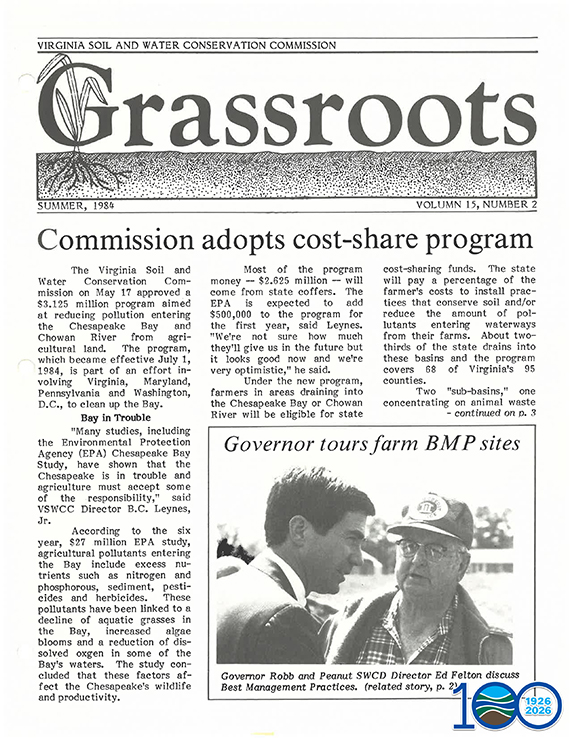
On this day, July 1, 1984, the Virginia Soil and Water Conservation Commission (VSWCC) — known today as the Division of Soil and Water Conservation — adopted the first Virginia Agricultural Cost‑Share Program (VACS) to help reduce pollution across the Commonwealth, including the Chesapeake Bay.
A total of $3.1 million in cost-sharing funds were approved to reimburse a portion of the farmer’s costs to install practices to help reduce pollution. At the time, VSWCC Director B. C. Leynes Jr. said, “We’re not sure how much they’ll give us in the future, but it looks good now and we’re very optimistic.”
That future is now. Today, the VACS program is the largest state‑based agricultural cost‑share program in the nation, with $223 million in cost‑share funding for 2026 — the highest level of investment in the program’s 42‑year history.
Learn more about the Virginia Agricultural Cost Share Program here: https://www.dcr.virginia.gov/soil-and-water/costshar2
Back to the top
Virginia State Parks Today
Posted June 29, 2026
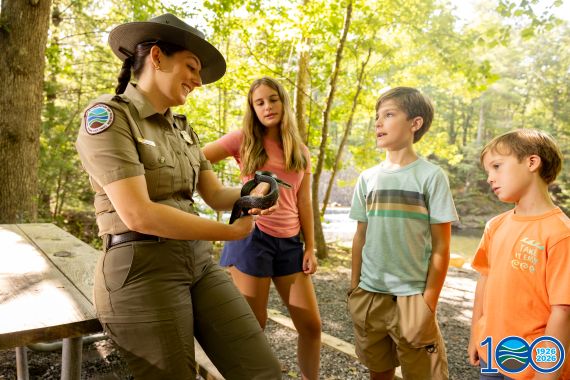
Since 1936, Virginia’s residents and elected officials have shown their commitment to maintaining a dynamic state parks system for a rapidly growing population. Ninety years later, our parks support more than 2,500 jobs and 80,000 acres, generate over $224 million in annual economic activity and continue growing through major investments, new parks and expanded trails.
Today, with innovations like all‑terrain wheelchairs, RightHear technology for blind and visually impaired visitors and colorblind EnChroma viewfinders, we’re making the outdoors more accessible for all.
Thanks to our visitors, partners and communities, we’re continuing to shape parks that welcome everyone.
Plan your visit to one of Virginia State Parks today: https://www.dcr.virginia.gov/state-parks
Back to the top
The fine art of conserving state parks
Danette Poole
Posted June 26, 2026
From sketchbooks to state parks, Danette Poole always saw the world through the eyes of an artist.
As a Virginia Commonwealth University art student in the 1970s, she imagined a career creating exhibits for national parks. She worked summer jobs at Virginia State Parks, including Seashore State Park, now known as First Landing in Virginia Beach, to pay her way through school.
Over a career that stretched nearly 45 years, Poole rose from seasonal interpreter to director of DCR’s Division of Planning and Recreation Resources. As she advanced into leadership roles, she found herself contributing to everything from park master plans and developing greenways and trails to the Virginia Outdoors Plan and conservation initiatives that still guide the Commonwealth today.
And she guided the parks through some of the most transformative decades in DCR history.
Learn more about Danette's career with Virginia State Parks and DCR: https://www.dcr.virginia.gov/insights/the-fine-art-of-conserving-state-parks

Back to the top
Racial integration of Virginia State Parks
Posted June 26, 2026
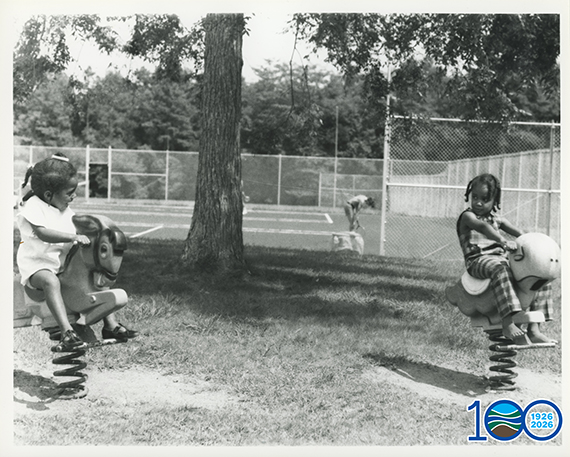
Before Virginia State Parks became the spaces for everyone that we know today, they were shaped by a long and difficult fight for civil rights. From 1936 to 1950, no facilities were provided for people of color, reflecting the Jim Crow laws that enforced “separate but equal” segregation across the South. That began to change when citizens like Maceo Conrad Martin challenged the system — after he was denied entry to Staunton River State Park in 1948, his lawsuit pushed Virginia to open Prince Edward State Park for Negroes in 1950.
Through years of advocacy — from local civic groups, garden clubs, business leaders and community members — the push to reopen and integrate Seashore State Park grew stronger. By the early 1960s, trails and outdoor areas were slowly reopened and by 1963, camping returned on a desegregated basis.
The passage of the Civil Rights Act of 1964 finally ended segregation in public facilities, including all Virginia State Parks. By 1965, Seashore State Park was fully reopened to everyone and was renamed to First Landing State Park in 1997.
Today, we honor this history and the individuals who fought for equal access. Their persistence helped shape the inclusive park system we strive to build and protect for all Virginians.
Learn more about the history of Virginia State Parks at: https://www.dcr.virginia.gov/state-parks/history
Back to the top
Virginia State Parks growth and preservation
Posted June 22, 2026
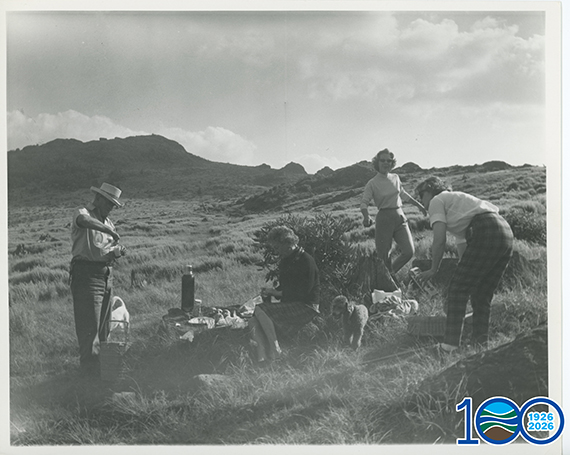
The next chapter of Virginia State Parks' story was one of steady growth and preservation.
In 1937, the state acquired 220 acres in Amelia County, now Sailor's Creek Battlefield Historical State Park — the site of the last major battle of the Civil War. By the early 1940s, the system expanded again as it took on the management of Bear Creek Lake State Park and Holliday Lake State Park as well as Goodwin Lake and Prince Edward recreational areas, known today as Twin Lakes State Park.
Southwest Virginia Museum Historical State Park in Big Stone Gap joined the system in 1943, offering a window into the region’s earliest settlements.
After years of negotiations with the National Park Service, the commonwealth assumed control of Swift Creek Recreation Demonstration Area in 1946. Soon renamed Pocahontas State Park, it became — and remains — the largest state park in Virginia at 7,950 acres.
And by 1948, land along Claytor Lake in Pulaski County was secured for yet another future state park known as Claytor Lake State Park.
These steady steps led to lasting impact and created a foundation for the Virginia State Parks system that we know today.
Learn more about the history of Virginia State Parks at: https://www.dcr.virginia.gov/state-parks/history
Back to the top
First Virginia State Parks brochure
Posted June 17, 2026
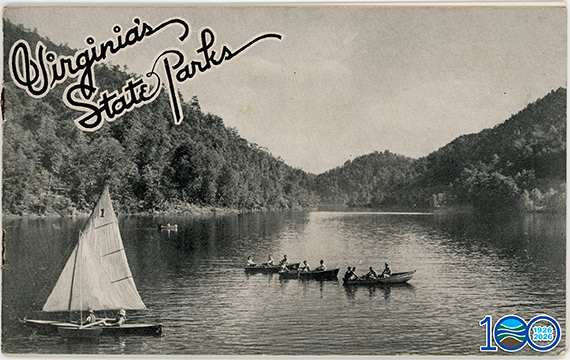
Take a look back to 1937 — when Virginia State Parks introduced its very first official brochure.
This early publication marked the beginning of a legacy that has grown from six state parks to a statewide system of 44 state parks dedicated to conservation, recreation and public service.
In 1937, Chairman Wilbur C. Hall said: “The principal idea behind the development of these areas has been to provide — at a moderate cost — places where men, women and children may enjoy even a day of rest and recreation and get back to nature.”
Nearly nine decades later, designs have evolved, but our commitment to connecting Virginians with the outdoors remains unchanged.
View this historical document in full here: https://www.dcr.virginia.gov/dcr100/document/VirginiaStateParks-1937.pdf
Back to the top
Join us in wishing Virginia State Parks a happy 90th Anniversary!
Posted June 15, 2026
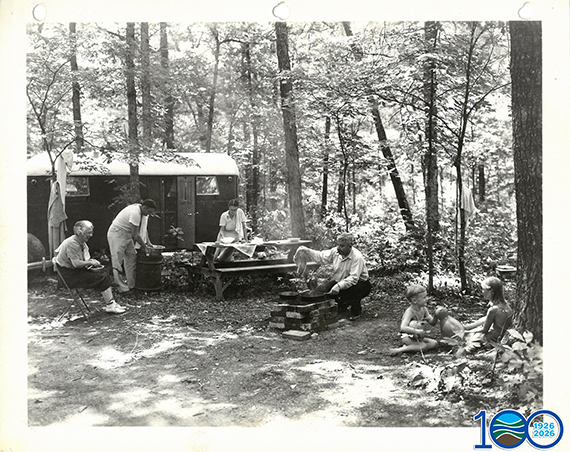
On this day, June 15, 1936, Virginia became the first state to open an entire system of state parks on the same day, launching a legacy of outdoor recreation, public access and cultural preservation that still thrives today.
Since 1936, our parks have connected millions to the outdoors and created memories that span generations. Here’s to nine decades of exploration — and many more to come.
Honoring our past. Investing in our future. Protecting Virginia’s natural and cultural treasures every step of the way.
Plan your visit to one of Virginia State Parks today: https://www.dcr.virginia.gov/state-parks/
Back to the top
Civilian Conservation Corps
Posted June 13, 2026
In 1933, opportunity and vision converged during a visit with President Franklin D. Roosevelt at Camp Rapidan. Virginia’s conservation leader William E. Carson made a bold suggestion: put the new Civilian Conservation Corps to work building a system of state parks.
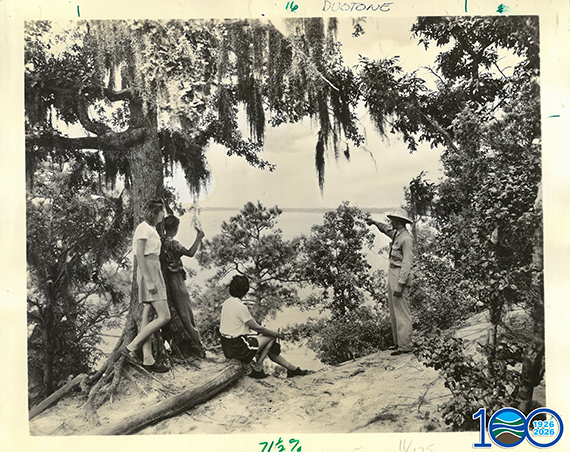
Roosevelt agreed but only if Virginia could show the nation what such a system could mean to a state. Less than a year later, the Commonwealth had secured the land for its first six state parks: Douthat State Park, Fairy Stone State Park, Hungry Mother State Park, Seashore State Park (Known today as First Landing State Park), Staunton River State Park and Westmoreland State Park.
On this day, June 13, 1936, Virginia State Parks held an opening ceremony at Hungry Mother State Park. Thousands attended for concerts, a water pageant and more, all in anticipation of the public opening of the state park system planned for two days later.
Learn more about the history of Virginia State Parks here: https://www.dcr.virginia.gov/state-parks/history
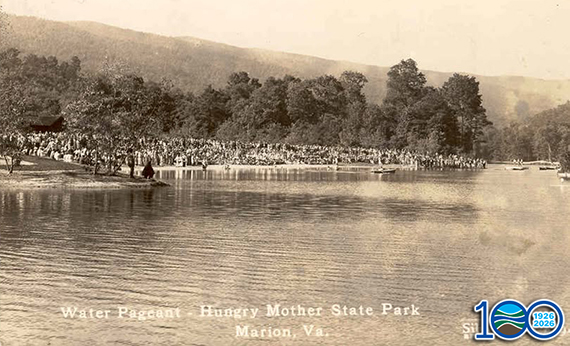
Photo courtesy of Smyth Count, Virginia
Back to the top
The beginnings of Virginia State Parks
Posted June 5, 2026
In 1926, Virginia brought conservation under one roof with the creation of the State Commission on Conservation and Development.
By 1929, statewide interest in creating Virginia state parks surged. Leaders from the Virginia Academy of Science, the Garden Club of Virginia and the Izaak Walton League gathered in Richmond to champion the idea — presenting their support directly to Governor Elect John Garland Pollard.
Their momentum led the Commission to study state park systems across the East. The findings from that 1930 study shaped the early blueprint for Virginia State Parks as we know them today.
To learn the history of Virginia State Parks and more, visit: https://www.dcr.virginia.gov/dcr100/dcr100-history
Back to the top
Dam Safety Awareness Day
Posted May 31, 2026
Today we acknowledge Dam Safety Awareness Day as a reminder of how vital strong infrastructure and proactive planning are for protecting Virginia communities.
Back in 2006, the Commonwealth passed Chapter 648 (HB 596) which renamed The Flood Prevention and Protection Assistance Fund to the Dam Safety, Flood Prevention and Protection Assistance Fund.
The fund’s mission expanded to offer loans and grants supporting:
- Dam design and repair
- Safety modifications
- Mapping and digitizing dam break inundation zones
This milestone continues to play an important role in building safer, more resilient communities.
Dam Safety Day highlights the importance of ongoing vigilance, smart planning and strong infrastructure across Virginia.
To learn more, visit: https://www.dcr.virginia.gov/dam-safety-and-floodplains

Back to the top
Flood Protection Fund
Posted May 19, 2026
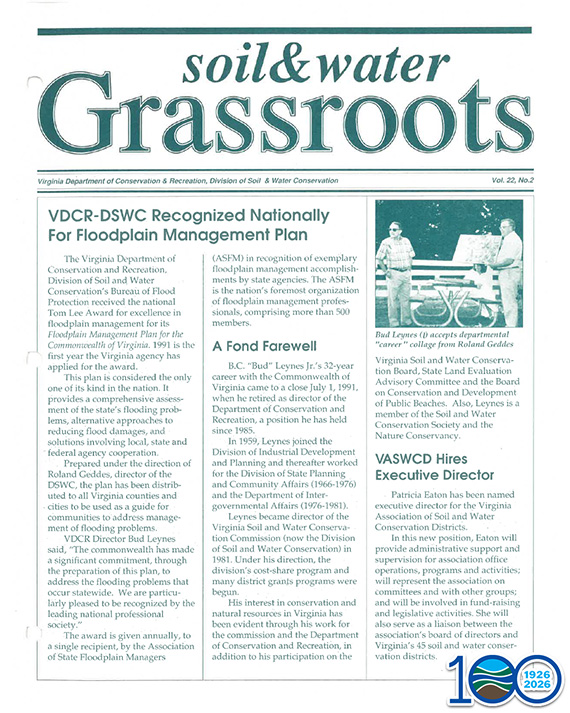
In 1991, the Division of Soil and Water Conservation’s Bureau of Flood Protection released Virginia’s first Floodplain Management Plan, which received the national Tom Lee Award for excellence in floodplain management.
The plan was considered the first of its kind in the nation at the time, providing a comprehensive assessment of the state’s flood risks and strategies for reducing flood damage.
Today, DCR’s Division of Dam Safety, Division of Floodplain Management and Office of Resilience Planning work closely with localities, state agencies and our federal partners to provide technical assistance and educational outreach that help reduce flood risk across the Commonwealth.
Learn more about the Virginia Floodplain Management Program: https://www.dcr.virginia.gov/dam-safety-and-floodplains
Back to the top
Community Flood Preparedness Fund
Posted May 5, 2026
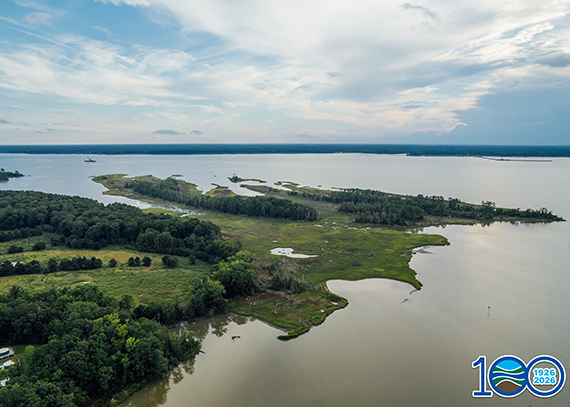
Established in 2020, the Community Flood Preparedness Fund has been powering local and regional efforts to reduce the impacts of flooding — including those intensified by climate change.
Today, the fund has invested over $300 million across six grant rounds, supporting projects that protect communities, strengthen infrastructure and improve long-term resilience.
Learn more about the Community Flood Preparedness Fund: https://www.dcr.virginia.gov/dam-safety-and-floodplains/dsfpm-cfpf
Back to the top
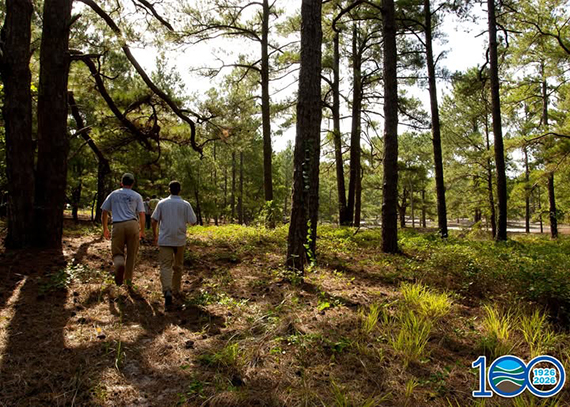
Virginia's Natural Heritage Program
Posted April 29, 2026
In 1986, The Nature Conservancy took a bold step to protect the Commonwealth’s rare plants, animals and natural communities by launching the Virginia Natural Heritage Program which became a part of the DCR in 1988.
In 1989, the Natural Area Preserve System was created — and today it safeguards 69 preserves spanning 66,700 acres of some of the most remarkable habitats in the state.
Now internationally recognized, Virginia’s Natural Heritage Program has been honored three times as the outstanding Natural Heritage Program in the Western Hemisphere. A true testament to Virginia’s leadership in biodiversity conservation and the power of protecting what makes our natural treasures extraordinary.
Learn more about the Natural Heritage Program, and its 40th anniversary here: https://www.dcr.virginia.gov/natural-heritage/nh40
Back to the top
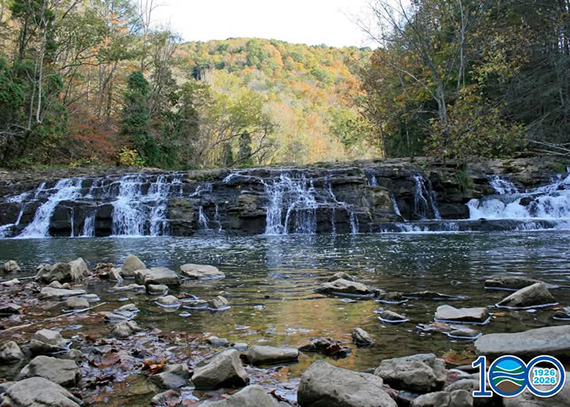
Virginia Flood Damage Reduction Act
Posted April 20, 2026
After a series of devastating floods — from Hurricane Camille in 1969 through major flooding in the 1980s — Virginia took bold steps to protect our communities. In 1987, the General Assembly consolidated all flood‑related programs under the Department of Conservation and Recreation.
Two years later, the 1989 Virginia Flood Damage Reduction Act officially made DCR responsible for statewide floodplain management.
Today, we continue that mission by helping communities reduce risk, strengthen resilience, and prepare for the future.
Learn more about DCR’s floodplain management here.
Back to the top
First Virginia Outdoors Plan – Virginia’s Common Wealth
Posted April 17, 2026
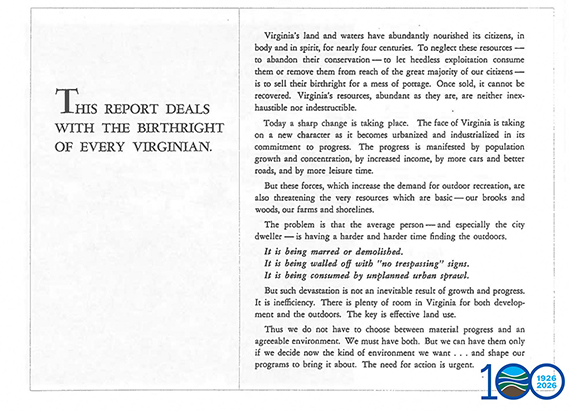
Since 1965, DCR has guided Virginia’s investment in outdoor recreation — administering more than $135 million in Land and Water Conservation Fund grants for 400+ projects and leading the Virginia Outdoors Plan for over six decades.
Today, the 2025–2030 Virginia Outdoors Plan continues this legacy with an interactive digital resource that helps shape parks, trails, and recreation access statewide. Virginians consistently show strong support for investing in the outdoors — and together, we’re building high‑quality places to explore, play, and connect.
Pictured are pages from the very first 1965 Virginia Outdoors Plan.
Read the full original document here.
Back to the top
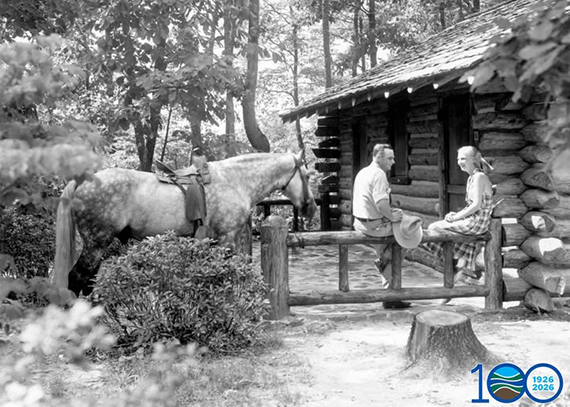
Virginia’s commitment to protecting open space runs deep.
Posted April 14, 2026
Since 1966, the Commonwealth has built a strong land conservation framework through legislation that created the Open-Space Land Act, the Virginia Outdoors Foundation, and key preservation structures like the Virginia Cave Commission, Virginia Land Conservation Foundation, and the Land Preservation Tax Credit.
Today, more than 4.33 million acres — 17.15% of Virginia — are permanently protected for future generations.
Learn more at https://www.dcr.virginia.gov/land-conservation/
Back to the top
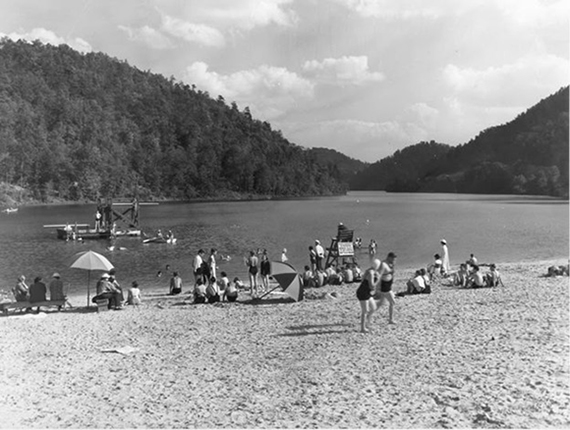
From six State Parks to 44, and from bold beginnings to statewide impact —DCR has been making history since 1936.
Posted April 8, 2026
On June 15, 1936, Virginia became the first state to open an entire system of state parks on the same day, launching a legacy of outdoor recreation, public access and cultural preservation that still thrives today.
With the opening of more parks, the protection of additional acres and the addition of new miles of trails, DCR has made accessibility a top priority.
Today, visitors can enjoy all-terrain wheelchairs, RightHear navigation technology for blind and visually impaired guests, and EnChroma-adapted viewfinders for colorblind visitors — ensuring Virginia’s outdoors are open to all.
Plan your visit to one of Virginia State Parks today: https://www.dcr.virginia.gov/state-parks/
Learn more at www.dcr.virginia.gov/state-parks/history
Back to the top
The foundation of the State Commission on Conservation and Development
Posted April 2, 2026
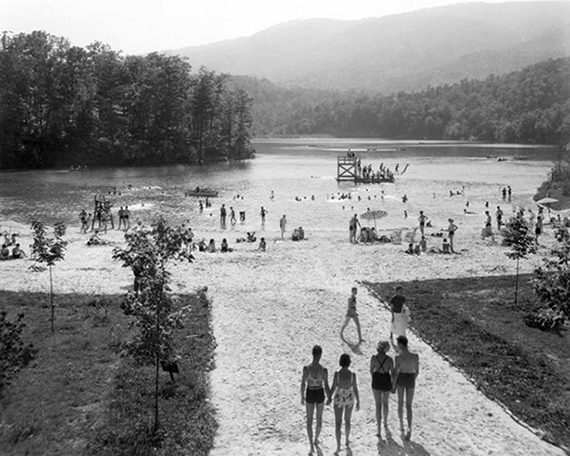
On March 17, 1926, the Virginia General Assembly passed landmark legislation creating the State Commission on Conservation and Development — the foundation of today’s Virginia Department of Conservation and Recreation.
This new commission united the work of the Water Power and Development Commission, the State Geological Commission, the State Geological Survey, the Office of the State Geologist, and the Office of the State Forester. It also established the authority to acquire land for public parks, setting the stage for a century of conservation leadership.
Today, 100 years later, DCR continues a legacy rooted in protecting what Virginians value most.
Learn more at www.dcr.virginia.gov/dcr100/dcr100-history
Back to the top
 Department of Conservation and Recreation